Most fall HVAC maintenance advice online was written for homeowners who are about to fire up a furnace after six months of sitting idle. That is not our situation. In Southwest Florida, fall is not the start of heating season. It is the moment your air conditioner finally gets a break after running almost continuously since March, and it is the best window all year to catch small problems before the snowbird season, the holidays, and the first genuine cold snap arrive.
A short seasonal checklist protects the equipment you have just worked very hard, keeps your energy bills in line, and reduces the odds of an inconvenient breakdown. Some of it takes fifteen minutes with a hose and a screwdriver. The rest belongs with a licensed technician, and knowing where that line sits is the point of this guide. If you would rather skip straight to booking, our HVAC services in Fort Myers cover everything below.
Key Takeaways
- Fall in Southwest Florida is recovery season for your AC, not furnace season, so the checklist looks different from the ones written for northern homes.
- Replace your HVAC air filter first. It is the cheapest task on the list and the one that affects airflow, humidity, and energy bills most directly.
- Flush the condensate drain line after a long cooling season, when algae buildup is at its worst.
- Clear vegetation and storm debris from the outdoor condenser unit and keep at least two feet of open space around it.
- Test your heat before you need it. The first cool night of the year is a bad time to discover the heat strips do not work.
- Book a professional HVAC tune-up in the fall while schedules are lighter, and consider twice-yearly service given our extended cooling season.
Why Fall HVAC Maintenance Matters in Southwest Florida
Your system has just finished the hardest stretch of its year. From March through October it ran long hours against high heat and heavy humidity, and every one of those hours added wear to the compressor, the blower motor, the capacitor, and the contactor. Components that are close to failing tend to reveal themselves under that kind of load, and fall is when the symptoms are still small enough to be cheap.
Hurricane season also runs through the end of November. Storms leave behind blown debris, saturated ground, flooded outdoor units, and power surges that quietly damage electrical components without stopping the system outright. A post-season inspection catches that damage before it turns into a failure in January.
Then there is the season ahead. Seasonal residents return and occupancy rises, which increases the load on systems that may have been idling on a high setpoint for months. Mild fall weather means the AC runs less, which often lets indoor humidity creep up even though the temperature is fine. And on the handful of genuinely cold mornings we get each winter, homes rely on heat pumps or electric heat strips that have not been energized since last February.
Check and Replace Your HVAC Air Filter
Start here. A dirty air filter restricts airflow across the evaporator coil, which reduces cooling capacity, hurts dehumidification, drives up energy use, and in bad cases lets the coil freeze over. It is the single most common cause of avoidable service calls.
Practical guidance for Florida homes:
- Check the filter monthly and replace it every 30 to 90 days, toward the shorter end if you have pets, allergies, or ongoing construction nearby
- Match the size printed on the old filter exactly, and note the airflow direction arrow when you slide the new one in
- A MERV 8 to 11 filter suits most residential systems, balancing filtration against airflow restriction
- Avoid very high MERV ratings unless your system was designed for them, as they can restrict airflow enough to cause problems
- Write the installation date on the filter frame in marker so you are not guessing next time
If a fresh filter turns grey within a few weeks, that usually points to duct leaks pulling in attic dust rather than an unusually dirty home.
Inspect Your Thermostat Settings
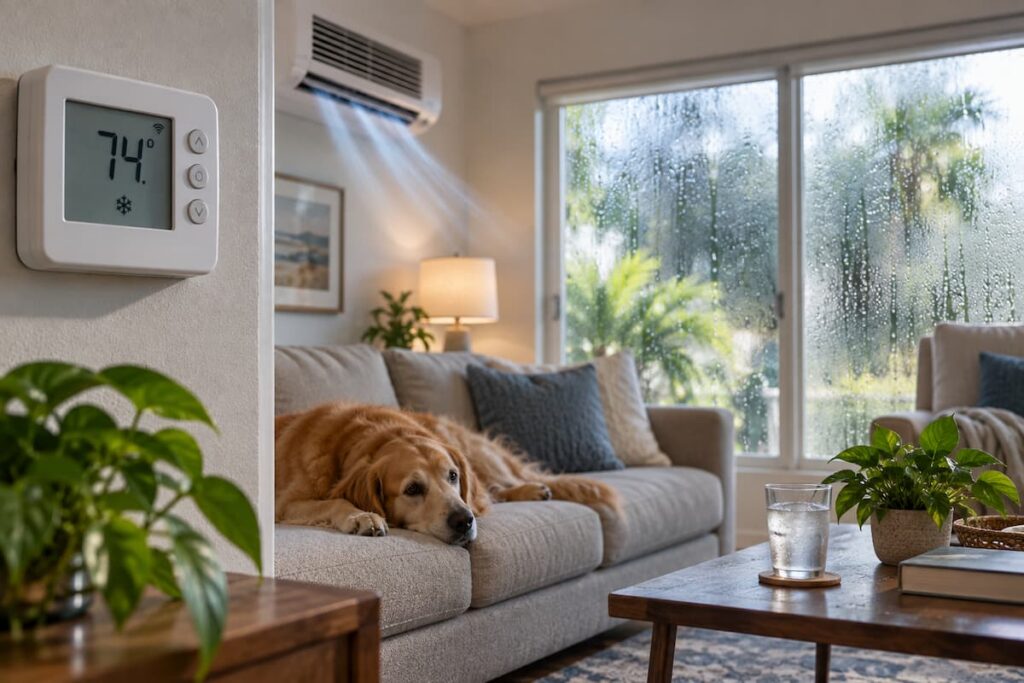
Your thermostat has probably been running the same summer schedule since spring. Fall is a natural point to revisit it, and a few small adjustments meaningfully improve comfort and efficiency.
- Set the fan to AUTO rather than ON. Continuous fan operation re-evaporates moisture off a wet coil between cycles and raises indoor humidity
- Replace the batteries if your thermostat uses them, before a dead battery leaves your system unresponsive
- Rebuild your schedule around fall routines, including school hours, return from summer travel, and cooler overnight temperatures
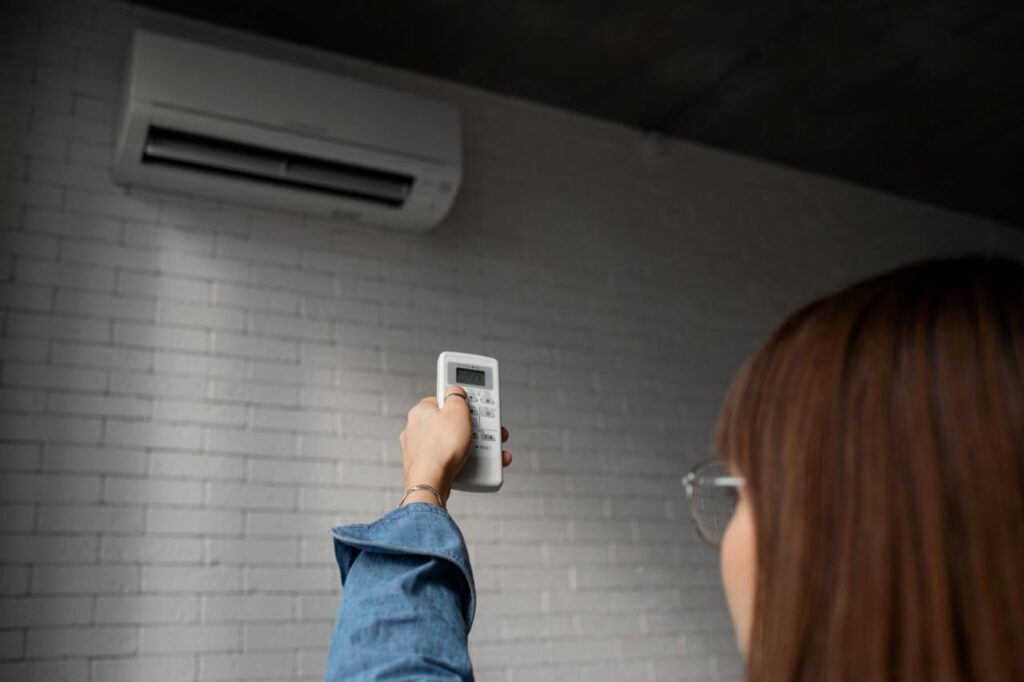
- Briefly test heat mode on a cool morning so you find out now, not in December, whether the heat pump or heat strips respond
- Compare the thermostat reading against a separate thermometer in the same room. A gap of more than two or three degrees is worth investigating
If you are leaving the property for part of the season, resist the urge to shut the system off entirely. Holding a setpoint in the low 80s with humidity control keeps moisture and mold in check while using very little energy. A smart thermostat makes that easy to monitor remotely.
Clear the Condensate Drain and Drain Line
Your AC has spent months pulling gallons of water out of the air, and all of it exits through the condensate drain line. In our warm, damp climate that line is an ideal environment for algae and biological slime, and by the end of the cooling season buildup is at its heaviest.
When the line clogs, water backs up into the drain pan. At best it sits there and evaporates back into your home, raising indoor humidity. At worst it trips the safety float switch and shuts the system down, or overflows into a ceiling, wall, or closet floor.
A basic fall clearing looks like this:
- Turn the system off at the thermostat and the breaker before you start
- Locate the drain line access point near the indoor air handler, usually a capped PVC tee
- Remove standing water from the pan with a wet vacuum or rags
- Pour a cup of distilled white vinegar into the access point to break down algae, then flush after about half an hour
- Confirm water is draining freely at the outdoor termination point
Skip the bleach, which can corrode metal components over time. If the line is fully blocked or you find water damage around the air handler, stop and call a technician rather than forcing it.
Keep the Outdoor AC Unit Clear of Debris
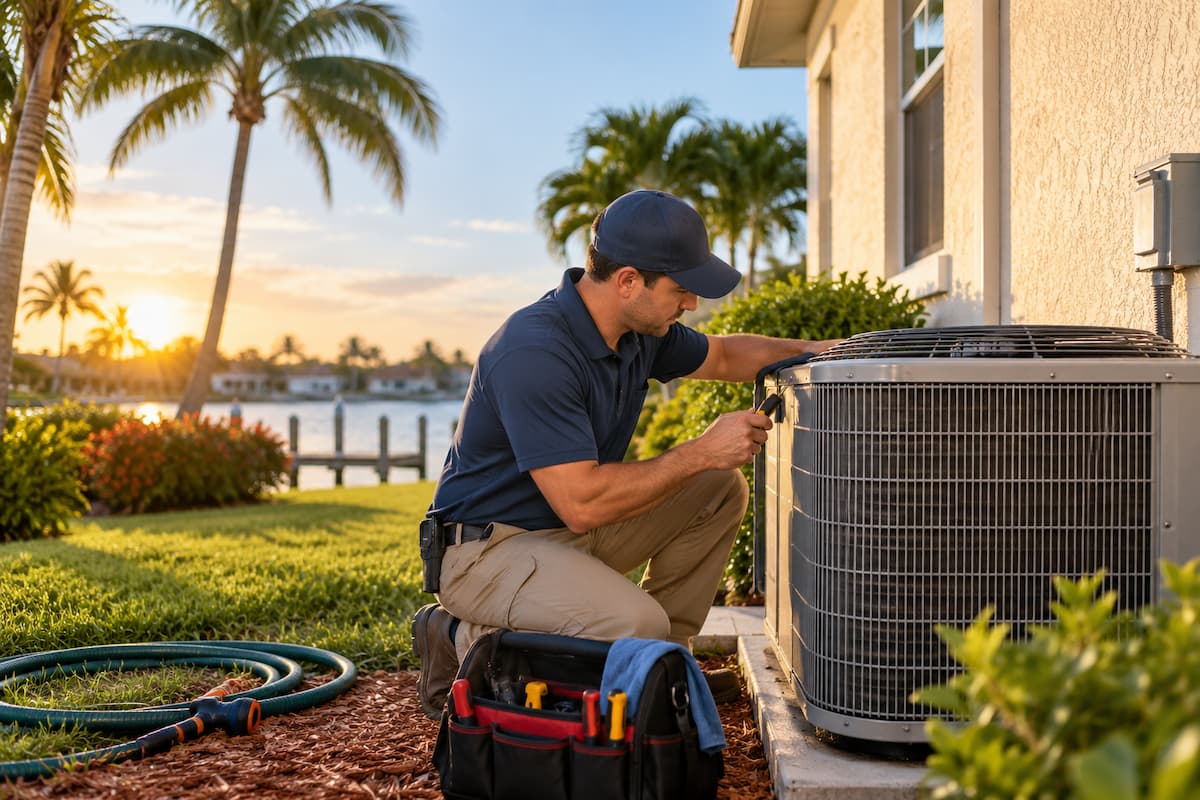
The outdoor condenser rejects heat from your home, and it needs unobstructed airflow through its fins to do that efficiently. After a summer of storms, landscaping growth, and lawn maintenance, most units need attention.
- Clear at least two feet of open space on all sides and several feet of clearance overhead
- Remove leaves, palm fronds, grass clippings, mulch, and storm debris from the base and the coil fins
- Trim back shrubs, vines, and hedges that have crept toward the cabinet over the summer
- Shut off power at the outdoor disconnect, then rinse the fins gently with a garden hose from the inside out, never a pressure washer
- Check that the unit still sits level on its pad, since heavy rain can shift or undermine the base
- Look for bent fins, dented cabinet panels, or corrosion, all of which are common after a storm season
Do not cover the unit for the winter. Full covers trap moisture and attract nesting animals, and in Southwest Florida your system will very likely run again within days.
Check Vents, Registers, and Airflow
Good airflow is what makes everything else work. Walk the house and confirm that every supply register and return grille is open and unobstructed by furniture, rugs, curtains, or boxes that migrated over the summer.
Vacuum dust from the grilles themselves, then do a quick room-to-room comparison. Rooms that run several degrees warmer or cooler than the rest of the house point to duct problems, poor balancing, or insulation gaps rather than a thermostat issue.
One myth worth retiring: closing vents in unused rooms does not save money. It raises static pressure in the duct system, strains the blower motor, and can push conditioned air out through duct leaks instead of into your living space.
Watch for Signs Your HVAC System Needs Service
Fall is when a system tells you what the summer cost it. Small symptoms now are almost always cheaper than the failure they turn into later.
Strange noises, poor cooling, high humidity, and rising energy bills
Pay attention to any of the following:
- Grinding, squealing, rattling, or a loud buzz at startup, all of which indicate mechanical or electrical trouble
- Air that is cool but not cold, or rooms that never quite reach the setpoint
- Indoor humidity holding above 60%, or a clammy feeling even at a comfortable temperature
- Short cycling, meaning the system turns on and off in brief bursts rather than steady runs
- Musty odors near the vents or the air handler, which often signal moisture and microbial growth
- Energy bills that are noticeably higher than the same month last year without a change in usage
- Water pooling near the air handler, ice on the refrigerant lines, or a breaker that trips repeatedly
A breaker that trips more than once, burning smells, or visible scorching should be treated as urgent. Shut the system down and call for service rather than resetting it again.
Consider Ductwork and Indoor Air Quality
In most Florida homes the ducts run through an attic that reaches punishing temperatures and holds a great deal of moisture. Every leak in that system pulls hot, damp attic air into your return or dumps conditioned air where nobody lives.
A ductwork inspection looks for disconnected sections, crushed flex duct, failed mastic and tape at the joints, and thin or damaged insulation. Sealing those leaks improves comfort, reduces the moisture load on your AC, and typically shows up on the next few energy bills.
Fall is also a sensible time to think about indoor air quality more broadly, especially before you close the house up for a season of heavier indoor living:
- Upgraded filtration or media air cleaners for households dealing with allergies
- UV treatment at the coil to limit microbial growth on a surface that stays wet for months
- Dedicated humidity control for homes that stay damp during mild weather when the AC rarely cycles
- Confirming that bathroom and kitchen exhaust fans actually vent outdoors rather than into the attic
Schedule a Professional Fall HVAC Tune-Up
The homeowner tasks above cover real ground, but several important checks require gauges, meters, and training. A professional fall HVAC tune-up typically includes:
- Measuring refrigerant charge and inspecting for leaks
- Cleaning the evaporator and condenser coils
- Testing capacitors, contactors, relays, and electrical connections for wear or storm-related damage
- Checking blower speed, static pressure, and temperature split across the coil
- Clearing and treating the condensate drain and verifying the float switch operates
- Testing heat pump reversing valve operation or electric heat strip function before winter
- Lubricating moving parts and tightening hardware loosened by months of vibration
Given how long our cooling season runs, many Southwest Florida homeowners benefit from professional service twice a year rather than once. Fall is also a practical time to book, since schedules are lighter than during a mid-summer heat wave.
Coolair Conditioning has served Southwest Florida homeowners since 2001. Our licensed, insured technicians provide seasonal maintenance, diagnostics, and repairs throughout Lee, Collier, Charlotte, and Hendry counties, including Fort Myers, Cape Coral, Naples, and Bonita Springs. You get honest recommendations and upfront pricing before any work begins, with emergency service available 24/7 when something cannot wait.
Call Coolair Conditioning at (239) 275-7077 to schedule your fall HVAC tune-up, or contact our team to request a free estimate on a system replacement.

AI Summary
Fall HVAC maintenance in Southwest Florida focuses on recovery from a long cooling season rather than furnace preparation. Homeowner tasks include replacing the HVAC air filter every 30 to 90 days with a MERV 8 to 11 filter, setting the thermostat fan to AUTO and rebuilding the seasonal schedule, testing heat mode before the first cold snap, flushing the condensate drain line with distilled white vinegar to clear algae buildup, clearing storm debris and vegetation to leave two feet of clearance around the outdoor condenser unit, and confirming all vents and registers are open and unobstructed. Warning signs that require a licensed technician include grinding or squealing noises, short cycling, indoor humidity above 60%, musty odors, water near the air handler, ice on refrigerant lines, tripped breakers, and unexplained increases in energy bills. Duct leaks in hot Florida attics raise both humidity and energy costs, making a ductwork inspection worthwhile. A professional fall HVAC tune-up covers refrigerant charge, coil cleaning, electrical component testing, static pressure and airflow, condensate drainage, and heat pump or heat strip operation. Because the cooling season runs most of the year in Florida, twice-yearly professional maintenance is often recommended. Coolair Conditioning provides fall HVAC maintenance and tune-ups across Lee, Collier, Charlotte, and Hendry counties in Southwest Florida.