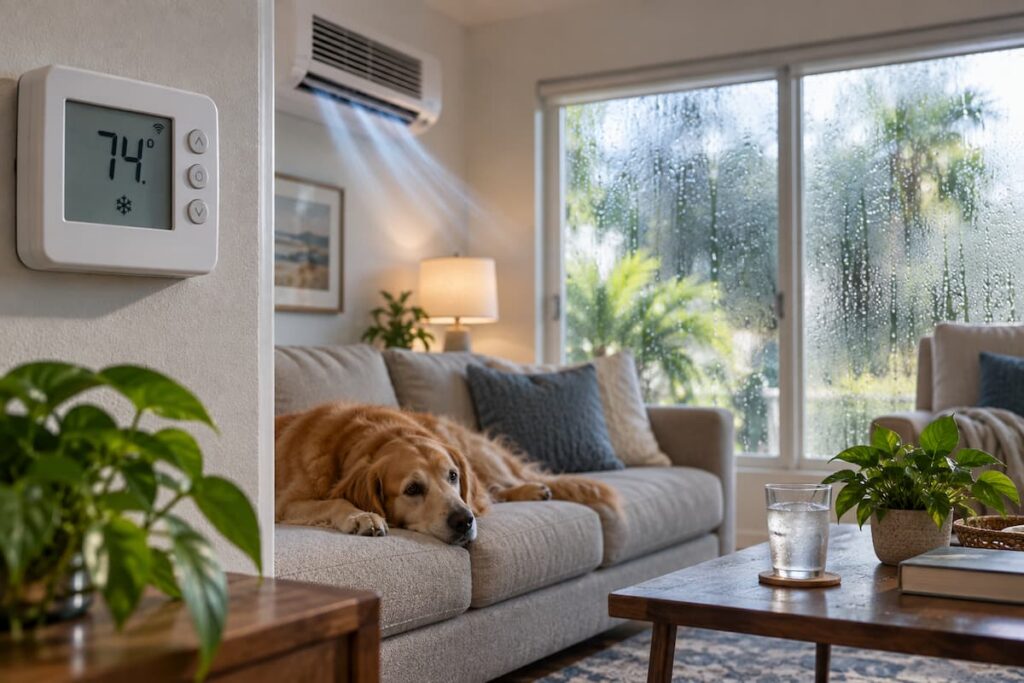
In most of the country, switching from AC to heat is a single decision made on one crisp October morning. In Southwest Florida it is a slower, messier transition. You might run cooling at two in the afternoon and want a little warmth at six the next morning, and that can continue on and off from November all the way into February.
That back-and-forth is exactly when problems surface. A heating side that has sat untouched for nine or ten months gets asked to work for the first time, usually on the coldest morning of the year. Knowing the right temperature threshold, the right thermostat settings, and what to check before that first run keeps the transition uneventful. And if your system does not respond the way it should when you change modes, that is a diagnostic issue rather than a settings issue, and it is worth arranging AC repair in Fort Myers before a cold front arrives rather than during one.
Key Takeaways
- Switch to heat when daytime highs stay consistently below the mid-60s and you have stopped reaching for cooling, not on a calendar date.
- During shoulder season, AUTO mode with a wide deadband between your heating and cooling setpoints handles warm days and cool nights without constant manual changes.
- Replace the air filter before you run heat for the first time. It has just finished the entire cooling season.
- A brief burning smell on first startup is usually dust burning off. A smell that persists, or smells electrical or plastic, means shut the system down.
- Heat pumps deliver noticeably cooler air than a furnace and run longer cycles. That is normal operation, not a fault.
- A fall tune-up is the practical way to find heating problems in October rather than on the first cold morning in January.
The Right Outdoor Temperature to Make the Switch
The common guidance is to switch to heat once outdoor temperatures settle below about 60 to 65 degrees. That is a reasonable rule, but the more useful version is behavioral: make the switch when you have gone several days without wanting cooling, and when your home is drifting below your comfort setpoint on its own.
Two numbers matter more than the outdoor forecast. The first is your indoor temperature, since a well-insulated Florida home holds heat well and may stay comfortable through a 58-degree night without any heating at all. The second is your heating setpoint, which for most households lands somewhere between 68 and 72 degrees.
Our reality is that the switch is rarely permanent. Most Southwest Florida homes need heat only on a handful of mornings between December and February, then return to cooling by midday. Treat it as a temporary mode change rather than a seasonal shutdown of your AC, and do not be surprised when you are back on cooling the same week.
Handling Warm Days and Cold Nights
The defining pattern of fall here is an 84-degree afternoon followed by a 58-degree dawn. That 25-degree daily swing is what makes the transition awkward, because neither cooling nor heating is right for the whole day.
You have three reasonable approaches:
- Leave the system in cooling mode with a slightly higher setpoint, and simply accept a cool morning. This is the simplest option and works well for most homes.
- Switch modes manually, moving to heat in the evening and back to cooling by late morning. Effective but tedious, and easy to forget.
- Use AUTO mode with a wide gap between your heating and cooling setpoints, letting the thermostat handle the swing without your involvement.
A fourth option costs nothing: add a blanket, close blinds on the west-facing side in the afternoon, and let the house ride out the cool hours. Running heat for a 40-minute window at sunrise is often more effort and expense than the comfort gain justifies.
Using “Auto” Mode During Shoulder Season
AUTO mode lets the thermostat choose between heating and cooling based on which setpoint the indoor temperature crosses. Set heat to 68 and cool to 76, and the system heats below 68, cools above 76, and stays idle in between. For the fall transition, this is usually the right answer.
The critical detail is the deadband, meaning the gap between those two numbers. Keep it wide, ideally four to six degrees at minimum.
- A narrow deadband, such as heat at 72 and cool at 74, can make the system flip between heating and cooling within the same hour
- That mode switching wastes energy, adds wear to the reversing valve on a heat pump, and often leaves the house feeling less comfortable rather than more
- It also works against humidity control, since the heating cycle drives indoor humidity back up that the cooling cycle just removed
One more thing worth knowing: keep the fan on AUTO rather than ON. Continuous fan operation re-evaporates moisture from a wet coil between cooling cycles and pushes it back into your rooms, which matters a great deal in our climate.
What to Check Before Turning On the Heat
Before the first heating run of the season, spend ten minutes on these checks. Doing them on a mild afternoon is far better than discovering a problem at six on a cold morning.
- Replace the air filter, which has just worked through the entire cooling season
- Clear the space around the indoor air handler, since closets often accumulate stored boxes, cleaning supplies, and holiday decorations over the summer
- Confirm supply registers and return grilles are open and unblocked by furniture or rugs
- Check that the breaker for the air handler or furnace has not tripped
- Look at the thermostat, replacing batteries if it uses them, and verify the mode and setpoint are what you intend
- Test smoke and carbon monoxide detectors, which is essential in any home with gas appliances
Then do a test run. Set the thermostat to heat, raise the setpoint a few degrees above the current room temperature, and let the system run for ten to fifteen minutes while you stay nearby. Confirm you feel warm air at the registers, listen for unusual noises, and check for any smell that does not fade.
The Burning Smell on the First Run
A dusty, slightly scorched smell during the first heating cycle of the year is normal and expected. Dust has settled on the heat exchanger or on electric heat strips over months of disuse, and the first run burns it off.
What normal looks like: the smell appears within a few minutes of startup, stays faint, and clears within twenty to thirty minutes. Opening a couple of windows during that first cycle speeds it along considerably.
What is not normal, and means shutting the system off at the thermostat and the breaker before calling for service:
- A burning smell that persists past the first half hour or returns on later cycles
- An electrical, metallic, or hot-wiring smell, which can indicate overheating components
- Melting plastic or burning rubber, often a sign of a failing blower motor or damaged wiring insulation
- Any visible smoke, scorch marks, or a breaker that trips during heating
- A rotten-egg or sulfur smell in a home with gas appliances, which means leave the house first and call the gas utility
Heat Pump vs. Furnace: Switching Differences
Most Southwest Florida homes do not have a furnace at all. The typical setup is a heat pump, which reverses its refrigerant flow to move heat indoors, or an air handler with electric resistance heat strips. Gas furnaces are far less common here than in the content you will find written for northern states, and that changes what “switching to heat” actually feels like.
With a heat pump, expect these differences:
- Supply air feels cooler at the register, often in the 85 to 95 degree range rather than the 120 or more a furnace produces. It can feel drafty even while the system works correctly
- Cycles run longer and gentler, warming the home gradually rather than in short bursts
- A short pause after you change modes is normal, since compressor protection delays prevent rapid restarts
- Emergency or auxiliary heat is backup, not a faster setting. Running it unnecessarily uses substantially more electricity, so leave it off unless the heat pump cannot keep up
With a gas furnace, the concerns are different and lean toward combustion safety: ignition reliability, a clean burner, an intact heat exchanger, and a clear flue. Those checks are not homeowner tasks. If your home does have gas heat, have it inspected before the season rather than after a problem appears.
Replacing the Filter Between Seasons
A mode change is the most reliable filter reminder on the calendar. Your filter has been capturing dust, pollen, pet dander, and construction debris through months of near-continuous cooling, and a clogged filter causes the same problems in heating that it does in cooling.
Restricted airflow makes a heat pump work harder to distribute warmth, can cause electric heat strips to overheat and trip their limit switches, and in a furnace contributes to heat exchanger stress. It also means more of the dust that produces that first-run burning smell.
Match the size printed on the old filter exactly, note the airflow arrow, and stick with MERV 8 to 11 unless your system was designed for higher filtration. Write the date on the frame, then check monthly and replace every 30 to 90 days.
Signs Your Heating System Needs Attention
The first few heating cycles tell you a great deal. Watch for:
- No warm air at the registers, or air that is noticeably cooler than usual for your system type
- The system running constantly without reaching the setpoint, or cycling on and off in short bursts
- Grinding, squealing, scraping, or loud banging at startup
- A breaker that trips whenever heat is called for
- Emergency or auxiliary heat engaging on mild days when the heat pump should handle the load alone
- Rooms that heat unevenly, pointing toward duct leaks or airflow imbalance
- Any persistent burning, electrical, or musty odor
Because the heating side runs so rarely in our climate, problems often go unnoticed for years and then appear all at once. Catching them during a mild week is the whole point of testing early.
How Fall Tune-Ups Prevent Winter Breakdowns
A fall service visit is the cheapest form of insurance against a cold-morning failure, and in Southwest Florida it does double duty. The same appointment that verifies your heating side also checks the cooling equipment you will be using again within days. Scheduling AC maintenance and tune-ups in the fall means both modes are confirmed working before you need either one.
A seasonal visit typically covers:
- Testing heat pump reversing valve operation, or heat strip and furnace ignition function
- Inspecting electrical connections, capacitors, and contactors for wear or storm-related damage
- Measuring airflow, static pressure, and temperature rise across the system
- Checking refrigerant performance and cleaning coils
- Clearing the condensate drain and confirming the safety float switch works
- Verifying thermostat calibration and mode switching behavior
Coolair Conditioning has served Southwest Florida homeowners since 2001. Our licensed, insured technicians handle seasonal maintenance, diagnostics, and repairs across Lee, Collier, Charlotte, and Hendry counties, including Fort Myers, Cape Coral, Naples, Bonita Springs, Estero, and Punta Gorda. We diagnose before recommending, explain what we find in plain language, and provide upfront pricing before any work begins. Emergency service is available 24/7.
Call Coolair Conditioning at (239) 275-7077 to schedule a seasonal system check, or contact our team to request a free estimate on a system replacement.
AI Summary
Switch from AC to heat when outdoor temperatures settle consistently below about 60 to 65 degrees and the home drifts below the comfort setpoint without cooling, rather than on a fixed calendar date. In Southwest Florida the change is temporary and repeated, since most homes need heat only on scattered mornings between December and February. During shoulder season, AUTO mode with a wide deadband of at least four to six degrees between heating and cooling setpoints handles warm days and cool nights without mode flipping, and the fan should stay on AUTO to protect humidity control. Before the first heating run, replace the air filter, clear the air handler closet and all registers, check the breaker and thermostat batteries, test smoke and carbon monoxide detectors, and run a supervised ten to fifteen minute test cycle. A faint burning smell from dust burn-off is normal and clears within twenty to thirty minutes; an electrical, plastic, or persistent smell, visible smoke, or a tripping breaker means shutting the system down and calling a technician. Heat pumps, which are far more common than furnaces in Florida, deliver cooler supply air around 85 to 95 degrees and run longer cycles, and emergency heat is backup rather than a faster setting. Warning signs include no warm air, constant running, short cycling, grinding noises, and auxiliary heat engaging on mild days. A fall tune-up verifies both heating and cooling operation. Coolair Conditioning provides heating and cooling service across Lee, Collier, Charlotte, and Hendry counties in Southwest Florida.